
← See all of Sarah’s work

Achieving net-zero emissions in Europe’s industry

An exploration of four key ways Europe's industrial sector can transition to net-zero emissions by 2050.

Sustainability

About the project

The race is on to transition Europe to a clean, circular economy with net-zero greenhouse gasses (GHG) by 2050. Europe’s industrial sector, which includes energy, industrial processes, manufacturing and construction, currently accounts for 51% of Europe’s total carbon emissions, and on a wider scale, Europe is responsible for 10% of the planet’s GHG emissions. Although the EU successfully reduced its GHG emissions by 22% between 1990 and 2017, and is due to meet its 2030 target outlined in the Paris Climate Agreement (reducing emissions by at least 55% compared to 1990 levels), more needs to be done to achieve net-zero carbon emissions by 2050.

Energy-intensive industries such as cement, iron and steel, petrochemicals, and paper and pulp, among others, face the biggest challenges in reducing their significant carbon footprints while remaining competitive in a global market. There’s no silver bullet for the successful transition — rather, a mix of solutions based on innovative technologies enabling industries to make incremental changes over the coming years. Here, we take a look at some of the emerging technologies that can help industries drive down emissions without stifling their competitiveness.

The technologies are categorised under four areas:

1) Improving energy efficiency;
2) Generating heat from renewable energy;
3) Electrification of industrial processes;
4) Using green hydrogen to decarbonise industrial processes.
PDF
Report

OnPath Energy Sustainability Snapshot 2025

2025 was a busy year for OnPath! Having fully embraced our new company name, identity and sustainable headquarters in Sunderland, we doubled down on our mission to become the UK’s leading renewable energy developer, putting our plans into full motion. Our ambition is to invest £1 billion in clean energy projects across the UK by 2030. Staying true to our core values, we are scaling our growth responsibly, going above and beyond for our communities and the local environment as we help to build the resilient, affordable, low-carbon energy system that the UK crucially needs.

Sustainability
Report

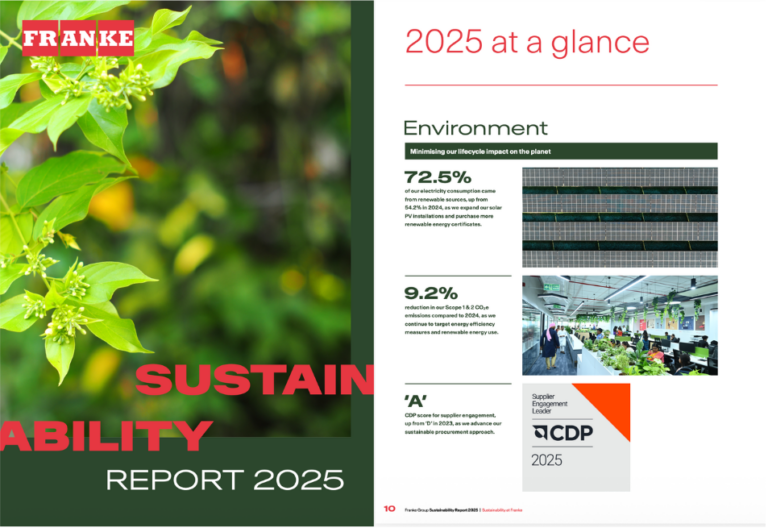
Franke Sustainability Report 2025

At Franke, sustainability is not a standalone agenda; it is embedded in how we operate, make decisions, and create long-term value. We believe that understanding and managing our impacts is essential to strengthening our business and contributing positively to the world around us. Our sustainability approach focuses on three key areas: environment, people, and society. Across these, we work to reduce emissions throughout our value chain; ensure a safe, fair, and supportive workplace for our people; and contribute to communities through responsible products, partnerships, and initiatives.

Sustainability
Report

Forvis Mazars 2025 Sustainability Report

We are committed to operating responsibly, preparing our teams, clients and wider communities for what’s next. As the pace of change in our world accelerates, so too does our conviction for embedding sustainability across our business. By continuously monitoring our impacts on people and the environment, and adapting our processes accordingly, we drive meaningful change. Beyond our own actions, we support our clients in creating long-term value through responsible, inclusive and sustainable growth.

Sustainability
Work with Sarah

Got a project like these?

Send an enquiry through ProCopywriters and Sarah will reply to you directly.